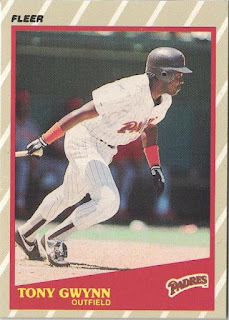
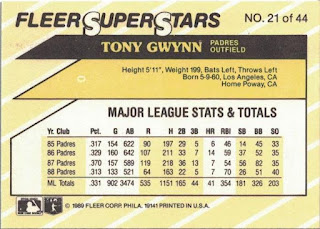
Back on Wednesday I blogged five Fleer cards taken from the small 44-card sets that Fleer produced in 1988. The following year, Fleer issued some more sets.
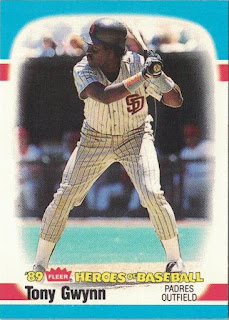
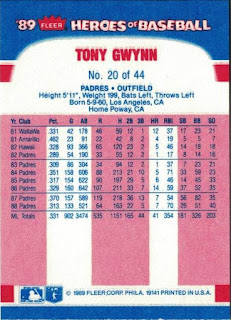
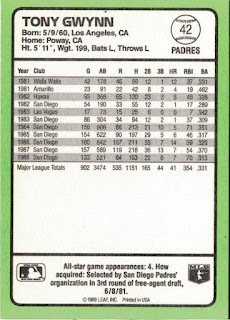
Card Number 892: Fleer Heroes of Baseball, 1989; #20
Back on Wednesday I blogged five Fleer cards taken from the small 44-card sets that Fleer produced in 1988. The following year, Fleer issued some more sets.
Card Number 892: Fleer Heroes of Baseball, 1989; #20
The first card in today's 'twins' post is probably the least exciting twin featured on this blog. Apologies.
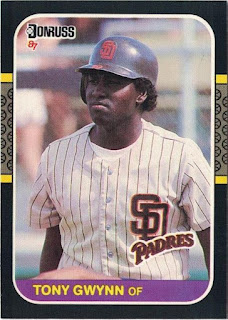
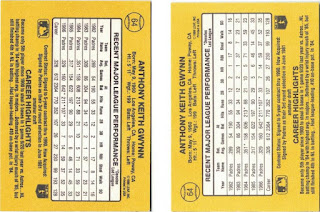
Card Number 884: DonRuss (factory set), 1987; #64
In November 2020 I ran my first "80s week". In the spirit of 80s movie sequels, here is the Return to 80s Week! Our week kicks off with some Topps cards.
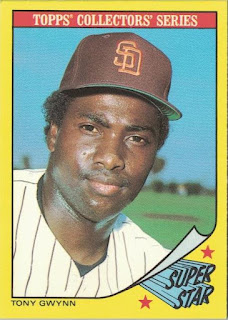
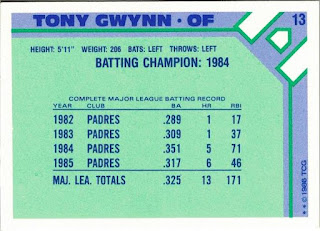
Card Number 881: Topps Baseball Champion Superstars, 1986; #13
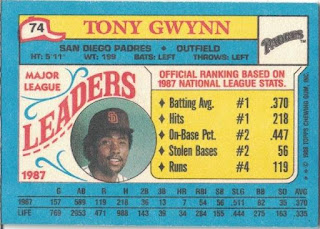
Card Number 882: Topps League Leaders Minis, 1988; #74
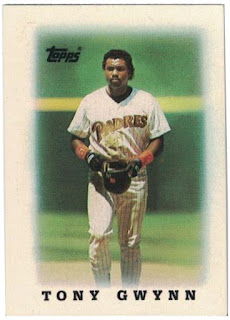
This card has a rare photo of Tony bare-headed. This is such an odd photo. Is he trudging back to the dug-out having failed to get on base?
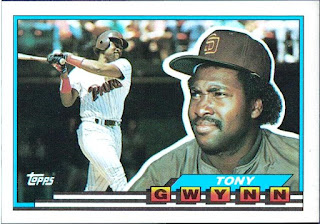
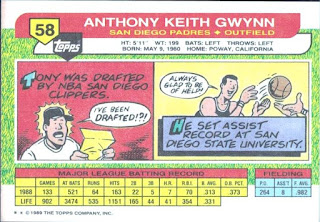
Card Number 883: Topps Big, 1989; #58
These cards are anoying because they don't fit in my binders. I mean, I could ram them in if I really wanted to have them in there. But it's not ideal.
According to Baseballcardpedia, this range of cards were shipped at the rate of one per box of Bazooka gum. That seems the exact opposite to Topps normal cards, which had a ratio of lots of cards to one stick of gum.
Card Number 704: Topps Bazooka, 1989; #13
Unlike K-Mart and Woolworth's in the previous two posts, I have no memories attached to Hill's Discount Department Stores. They were a USA-only chain and had disappeared by the first time I went on holiday to the USA. Wikipedia tells me that Hill's started in the 1950s and lasted until 1999 when it was bought out by another company that then ceased trading not long after.
Card Number 697: Hill's Team MVPs, 1989; #16
This is a solid card front, although the picture initially looked like it had been airbrushed. You can just about make out the beginning of the word 'Padres' under Tony's elbow though. The disembodied hand with the catcher's glove in the lower right corner is a fun additional touch. The frame lay out is very nicely designed, particularly the ribbon with Tony's name on.
The back is simple and effective. If you're going to show a stylised baseball field, then do it in green like this.
Tony had a difficult season in 1988 after winning the batting title in 1987 with a .370 average. He struggled with some injuries early on in 1988 and missed the All Star Game - it was the only All Star Game he was not selected for from 1984 to 1999. Even so, he ended up the Padre with the most hits, most RBI and stolen bases, although he stole less than half the number he had nicked in 1987.
Hills did another set the following year of 'Hill's Hit Men' but Tony wasn't included in that set. So, from my perspective this card means I have another complete run.
I'm sure someone somewhere has done a project cataloguing all the small standalone sets that were sold during the baseball card boom of the late 1980s. Fleer usually produced a few sets each year, and Topps were producing sets like this for several different retailers. These sets offer something a bit different for collectors and they also act as a reminder of shopping before the Internet when there were these things called shops.
Total: 697 cards
I have a funny story about K-Mart. On our first road trip to America, Cathy and I filled up a trolley with cool stuff in a K-mart and then had our credit card declined. So we had to go back to the hotel to get our traveller's cheques. When we got back to the store the cashier was very surprised to see us and said they were just about to start putting all the stuff back on the shelves! (We had a few problems with our credit card that holiday - I've learned to always let the credit card comapny know that we are going abroad!)
Anyway, K-Mart have had a longstanding relationship with Topps. These days that means exclusive parallels or special inserts in packs of Topps baseball cards sold in K-Mart. But in the late 1980s and early 1990s, it meant exclusive small sets sold only in K-Mart stores. I've blogged about a K-Mart card from 1990 previously.
Card Number 693: K-Mart Memorable Moments, 1988; #12
A sequel to yesterday's blog post about Post Cereal cards. Today we look at cards produced a few years earlier by a rival company - Quaker Oats. (I realise I have done these in the wrong chronological order. Oh well.)
I was surprised to learn that the Quaker Oats Company was not founded by Quakers. The founders just adopted the name because the Quaker sect had a good reputation for honesty and purity. The Quaker in their logo isn't based on a particular Quaker in the current design, but originally he was sort of based on William Penn, founder of Pennsylvania.
Like Post, Quaker gave baseball cards away in their cereal. Unlike, Post, they got Topps to print the cards.
Card Number 691: Quaker Chewy Granola Bars, 1986; #7
Wait, is a granola bar a breakfast cereal... ah, close enough.
Back in November (I think), my friend Gawain bought a job lot of cards for me on eBay and sent them to his US shipping address. It was one of those lots that cost pennies in the USA but shipping it over would have cost a fortune in fees. And so they sat in Gawain's mailbox until he had enough stuff there to ship it all to the UK and they arrived last week.
I had actually forgotten all about it until Gawain started sending me photos of the cards.
The cards are mainly oddballs, promo cards and "food issues" - cards that are easy to obtain in America but harder to find over here. Well over half the bundle were new cards to the collection - in fact there were 19 new cards, which feels wonderfully symbolic. That also takes me over another century mark.
I thought I'd start with a couple of odd-sized cards, for fun.
Card Number 686: Topps Major League Leaders, 1987; #35
Somewhere I have read a story about Tony Gwynn nervously waiting for the announcement of whether he had been inducted into the Hall of Fame, and saying that he wasn't going to get in because he never won the MVP Award. I can't remember where I read that. I have looked through He Left His Heart in San Diego a couple of times but can't find the reference, so I must have read it somewhere else, probably on the Internet somewhere.
Anyway, Tony might never have won the MVP, but that didn't stop card companies from including him in MVP subsets.
Card Number 674: Fleer Baseball MVPs, 1989; #17
This card was sent to me by Michal. It took 2 weeks to travel the 30 miles from where Michal lives to where I live. I think I could have walked to pick it up and walked back home again quite easily in the time it took for the mail to get it to me.
This card is from one of the 44-card complete sets that Fleer produced. They seemed to produce a few of these sets every year in the late 80s. I have a couple of cards from other sets issues in 1989, and this card brings me up to 12 Tony Gwynn cards issued in sets like this overall. They have a nice quality glossy finish and the card stock is higher quality than the regular Fleer base cards.
The back is a bit dull, but it is nicely laid out.
The blurb has an oddly specific comment about ruining a pitcher's attempt at a no-hitter, which takes precedence over his batting title in 1988. There's also a mention of his brother Chris playing in the Major Leagues too. Chris had played 25 games for the Dodgers in the two previous seasons.
Fleer had given Chris Gwynn a rookie card in their 1988 set, which he shared with Peter Smith from the Braves. He also had a Score card in 1988 as a "rookie prospect". In 1989, Chris got a card to himself in the Fleer main set. He was also in the Upper Deck set that year, and was also still appearing in minor league sets. He didn't get a Topps card until 1990, although he was mentioned on the back of Tony's 1985 Topps card.
I have noted before how despite never winning the MVP Award, Tony appeared on a lot of MVP-related cards, mainly from DonRuss cards. Tony was in an MVP insert series in the 1994 DonRuss set, and in earlier sets too. That second link also includes some cards from the Upper Deck MVP brand sets.
Total: 674 cards
I got chatting to Jason after he posted a picture of his set of Project 2020 Tony Gwynn cards in the UK Facebook Group. They looked really nice together and I have a tinge of envy. The envy is mixed with gratitude, though, because Jason sent me a picture of some of his duplicate Tony Gwynn cards and asked if I needed any. I did, and shortly afterwards an envelope arrived with some cards in. (It actually arrived the day after the cards from Dean arrived so I had consecutive days with baseball cards in the post. Happy days!)
Back in the 1980s Topps had other ranges besides their flagship, including smaller sized cards depicting 'league leaders'. I've already blogged about Tony's card in their range from 1986.
Card Number 581: Topps Major League Leaders,1989; #39
While he was the batting champion in 1988, he ranked lower in on base percentage and didn't record as many hits as might be expected. He was ranked joint tenth overall. Partly that was down to injury during the 1988 season.
In 1989 these cards were sold in packs of 7 for 30 cents a pack. There were 77 cards in the set, with a few players from each team. Although it doesn't seem the cards are particularly rare, they don't turn up as often as might be expected in sale lots so I was very pleased to have the opportunity to obtain this card.
Total: 581 cards
I own some Classic Baseball cards for other players, but didn't have a Tony Gwynn one until the joblot that prompted me to launch 80s week. So this is a debut for a card company that hasn't featured on the blog yet.
It's also unusual because it actually comes from a board game. According to Baseballcardpedia, the Classic Baseball trivia game was produced by a company in Alabama called Game Time, and the game was sold in toy shops as well as through card dealers. Later Classic sets were released as supplemental sets for the game.
I have blogged about a number of cards that have a game element to them, but this is the first time I have blogged about a card that has been removed from an actual game.
Card Number 491: Classic Baseball, 1987; #26
This is a sequel of sorts to "Know the Score" which I published way back in May. In that first post I said that Score cards tended to have more interesting card backs than fronts, and I feel the same is true of the cards in this post. So I am going to show them back to front.
Card Number 365: Score Baseball's Hottest 100, 1989; #40
Even though he had spent 1988 dogged by injury, Tony Gwynn was included in the 100 players featured in this set from Score. It was sold as a complete set along with a book and some "magic motion trivia cards" that were about Hall of Famers rookie seasons. (Checklist)
I'll pop the answers in tomorrow's post!
Total: 367/394